






|
|
 |
 |
|
|
|
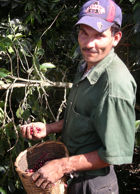
Frequently Asked Questions about CoffeeWhat to look for in a roaster of coffee?The best coffee rosters focus on sourcing the highest quality handpicked highland Arabica beans from the world's prime gowing regions - the strong, unique tastes in coffee - and we make them available within a day of roasting. Handpicking only selects the ripe red coffee fruit, which results in a pure taste. It is best to know exactly where your coffee comes from, rather than "secret" blends (such as a "Mocha-Java" blend). It is best to roast coffee in small batches and consume it within two to three weeks of roasting. Coffee labelled with the roasting date is far more useful than a "best before" date. What specied of coffee is best?There are two main commercial species of coffee: Arabica and Robusta. Robusta trees produce twice the amount of coffee per tree in half the time with twice the amount of caffeine per bean. It's a common filler in supermarket blends of coffee. The green Rubusta coffee generally sells at one fifth the price of high-altitude premium green Arabica beans. However, the taste of the woody Robusta coffee is a far cry from handpicked highland Arabica beans. Why handpicked?The coffee bean tastes best when it's harvested just ripe (like all other fruit, in fact). This is easy to see as the coffee cherry is bright red. Green coffee tastes "nutty", over-ripe coffee tastes rotten and sour. The coffee tree ripens unevenly with the same branch having cherries in several stages - with several sweeps of a handpicking harvest only ripe coffee is selected; mechanical harvesting removes everything at one time. Why high-altitude grown?The coffee tree grows slower and the coffee cherries generally take about three months longer to develop from flower to fruit. Because of the slower growth the small, hard dense coffee bean is far more intensely flavoured and like wine, picks up the characteristics of its terroir better. Lowland coffee, common to places like Brazil, grows fast and is also often harvested mechanically in one harvest. The lowland Arabica coffee bean has a low density and has much less taste (it's also a lot cheaper). Why the big deal about freshness?Roasted coffee is very much like baked bread or popcorn: it goes stale. Stale bread or popcorn can be consumed safely and provides sustenance, but does not taste the best. Stale coffee is much the same. Storing in a fridge or deep-freeze?The first priority is to consume coffee in the first two weeks after roasting. If you are intent on storing coffee the best is to store the coffee is as whole beans in an airtight container in the deep-freeze. Only remove the portion of the beans that you require, keeping the jar in the deep-freeze and hence not running the risk of water condensation on the beans (which brews the coffee). The fridge is a dangerous place - the coffee runs a higher risk of condensation and of picking up other odors from the fridge. It would be better to store the coffee in an airtight container at room temperature than in a refrigerator. I have an espresso machine: do I need special espresso bean blends?Espresso is just another way of brewing coffee. In fact, because of the water pressure generated by espresso machines, it provides a very satisfying extraction of most coffees, typified by the rich crema. You do not need robusta beans in espresso coffee. Can you recommend some books on coffee?The Joy of Coffee by Corby Kummer - most recommended as an introduction Coffee - a guide to Buying, Brewing and Enjoying by Kenneth Davids (5th Ed) The Perfect Cup by Timothy James Castle Coffee by Philippe Boe The Coffee Companion by Jon Thorn Uncommon Grounds - a history of coffee by Mark Pendergrast How to taste coffee?There are a few basic things you want to look out for when cupping (tasting) coffee. First smell the ground coffee and note the fragrance and then smell the cup and note the aroma. Coffee tasting is all about smell. Then take a big slurp of coffee, covering your entire tongue (make sure it's cool enough first) and look for he following: acidity (like the difference between flat and sparkling water); overall flavor and specific flavors; body (the weight or syrupiness of the drink); and finally the aftertaste. What are the basic rules of brewing coffee?Use 50 grams (1.75 ounces, 3.5 tablespoons, 1/5 cup) of freshly-roasted, freshly-ground quality Arabica coffee per litre of good tasting water heated to no more than 92°C (198°F) or less.
|
|
|
|
Beneficio Rio Frio
|
|
|
|
|
Welcome | Company | Production | Honors | Coffee Facts | Resources | Contact Us | Español Site Map Copyright © 2008 Beneficio Rio Frio. All Rights Reserved. v1.03 - 15Mar08 |
|